
History and Devotion to the Sacred Heart of Jesus
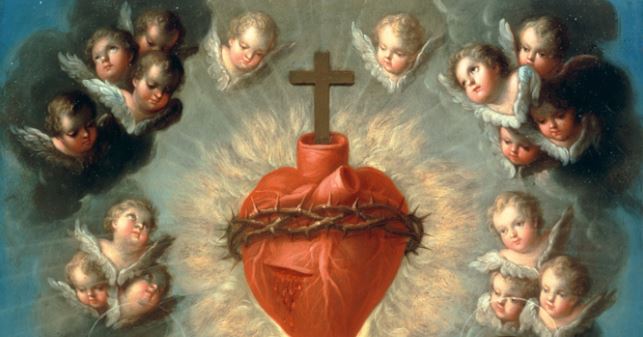
Feast Day: Friday after Corpus Christi
The Sacred Heart of Jesus is one of the most powerful and beloved symbols in Catholic devotion. It represents the infinite love of Christ—a love that is compassionate, patient, and always open to humanity, even in the face of indifference and rejection.
The devotion to the Sacred Heart invites us to respond to God’s love with trust, gratitude, and reparation, especially through prayer, communion, and acts of charity.
The Sacred Heart in the Bible
The roots of this devotion are found in Sacred Scripture, where the heart is often used as a symbol of God’s love and mercy. Two key moments in the Gospel reflect the depth of Jesus’ love:
- At the Last Supper, Saint John the Apostle rests his head on Jesus’ chest (cf. John 13:23), a gesture of closeness and comfort.
- On the Cross, a Roman soldier pierces Jesus’ side, and blood and water flow out (cf. John 19:34), symbolizing the sacraments of the Church and the outpouring of divine mercy.
These events reveal not only Christ’s physical suffering but also the deep emotional and spiritual wounds caused by humanity’s sins. The heart of Jesus is both wounded and loving, full of divine desire to bring us healing and salvation.
The Revelation to Saint Margaret Mary Alacoque
While devotion to the Sacred Heart can be traced back to early Christian mystics, it became widespread in the 17th century thanks to the visions of Saint Margaret Mary Alacoque (1647–1690), a French nun of the Visitation Order in Paray-le-Monial.
See also: What are marine spirits? – Bible Study
Between 1673 and 1675, Jesus appeared to her in a series of mystical visions, calling for a greater devotion to His Sacred Heart and asking for a special feast to honor it.
The First Revelation (December 27, 1673)
Jesus invited Margaret Mary to take the place of Saint John at the Last Supper, resting spiritually on His heart. He said:
“My divine Heart is so passionate with love for men that, not being able to contain within itself the flames of its burning charity, it needs your help to spread them.”
He chose her as an instrument to share His desire for love, reparation, and honor.
The Second Revelation (1674)
In this vision, Jesus appeared on a throne of flames, His Heart surrounded by thorns and topped by a cross. He revealed the riches of His divine Heart:
“I desire to manifest My Heart to men, with all its treasures of love, mercy, grace, and salvation… All who honor this image will receive abundant blessings.”
The Third Revelation (1674, during Eucharistic Adoration)
Jesus appeared radiant, showing His five wounds shining like suns, and flames pouring from His Heart. He expressed sorrow at being met with coldness and rejection, even from the faithful:
“If only they returned a little of My love, it would ease My pain. Yet I receive nothing but indifference.”
The Fourth Revelation (June 1675)
Jesus showed His Heart once again and said:
“Behold this Heart that has loved men so much and is met with nothing but ingratitude, contempt, irreverence, and coldness.”
He asked for a special feast day on the Friday after the Octave of Corpus Christi, to make reparation for the offenses committed against Him in the Blessed Sacrament.
See also: Prayer to the Archangel Chamuel, to Ask for a Job for this year – Faithful to God
The Feast of the Sacred Heart of Jesus
The first liturgical celebration of the Sacred Heart was held on October 20, 1672, thanks to Saint John Eudes. But it wasn’t until 1856 that Pope Pius IX officially established the Feast of the Sacred Heart for the universal Church, after years of resistance—particularly from the Jansenist movement and the effects of the French Revolution.
The feast is now celebrated every year on the Friday after Corpus Christi, honoring Christ’s love and calling the faithful to personal consecration, acts of reparation, and devotion to His Heart.
The Sacred Heart in Church Tradition
Several saints and mystics had a deep devotion to the Sacred Heart even before Saint Margaret Mary, including:
- Matilda of Magdeburg (1212–1283)
- Matilda of Hackeborn (1241–1298)
- Gertrude the Great (1256–1302)
- Blessed Henry Suso, a Dominican (1295–1366)
Over time, Popes have also encouraged the devotion:
- Leo XIII consecrated the entire world to the Sacred Heart in 1899 (Annum Sacrum).
- Pius XI, Pius XII, John Paul II, and Benedict XVI all wrote about the spiritual depth and meaning of this devotion.
- In 1873, Ecuador became the first country to be consecrated to the Sacred Heart by President Gabriel García Moreno.
Living the Devotion Today
Devotion to the Sacred Heart is not only about prayer—it’s a way of life. It calls us to imitate the love of Christ in our:
- Families – by practicing forgiveness, patience, and unity
- Communities – through service to the poor and marginalized
- Parishes – by participating in the sacraments with reverence
- Personal lives – with acts of reparation, trust, and surrender to God
See also: How to pray to the 7 archangels?
Simple Ways to Honor the Sacred Heart
- Pray the Litany of the Sacred Heart
- Wear a medal or scapular of the Sacred Heart
- Make the First Friday Devotion – attending Mass and receiving Communion on the first Friday of nine consecutive months, as Jesus requested
- Display an image of the Sacred Heart at home
- Consecrate yourself or your family to the Sacred Heart
- Offer acts of reparation for sins against Jesus in the Eucharist
Final Thoughts
The Sacred Heart of Jesus continues to beat with love for each of us. His Heart is open and wounded, always ready to welcome, forgive, and heal.
In a world that often grows cold, indifferent, or selfish, the Sacred Heart reminds us of the warmth of divine mercy. Let us respond to His love with our own hearts—through prayer, trust, and acts of love for others.
“Sacred Heart of Jesus, I trust in You.”
Related pictures:
 Novena to Saint Michael the Archangel and the Nine Choirs of Angels
 The Prayer to the 7 Swords of Saint Michael: Strength and Divine Protection
Saint Mark: The First to Record the Teachings of Jesus
The Prayer to the 7 Swords of Saint Michael: Strength and Divine Protection
Saint Mark: The First to Record the Teachings of Jesus
 Miracles and Benefits of the Prayer to Saint Raphael the Archangel for Healing